Lecture 12: Data Labelling and Augmentation


Topic overview#
- Tools for fancy labelling
- Annotation conventions
- Augmenting data
Resources used:
Computer vision tasks#
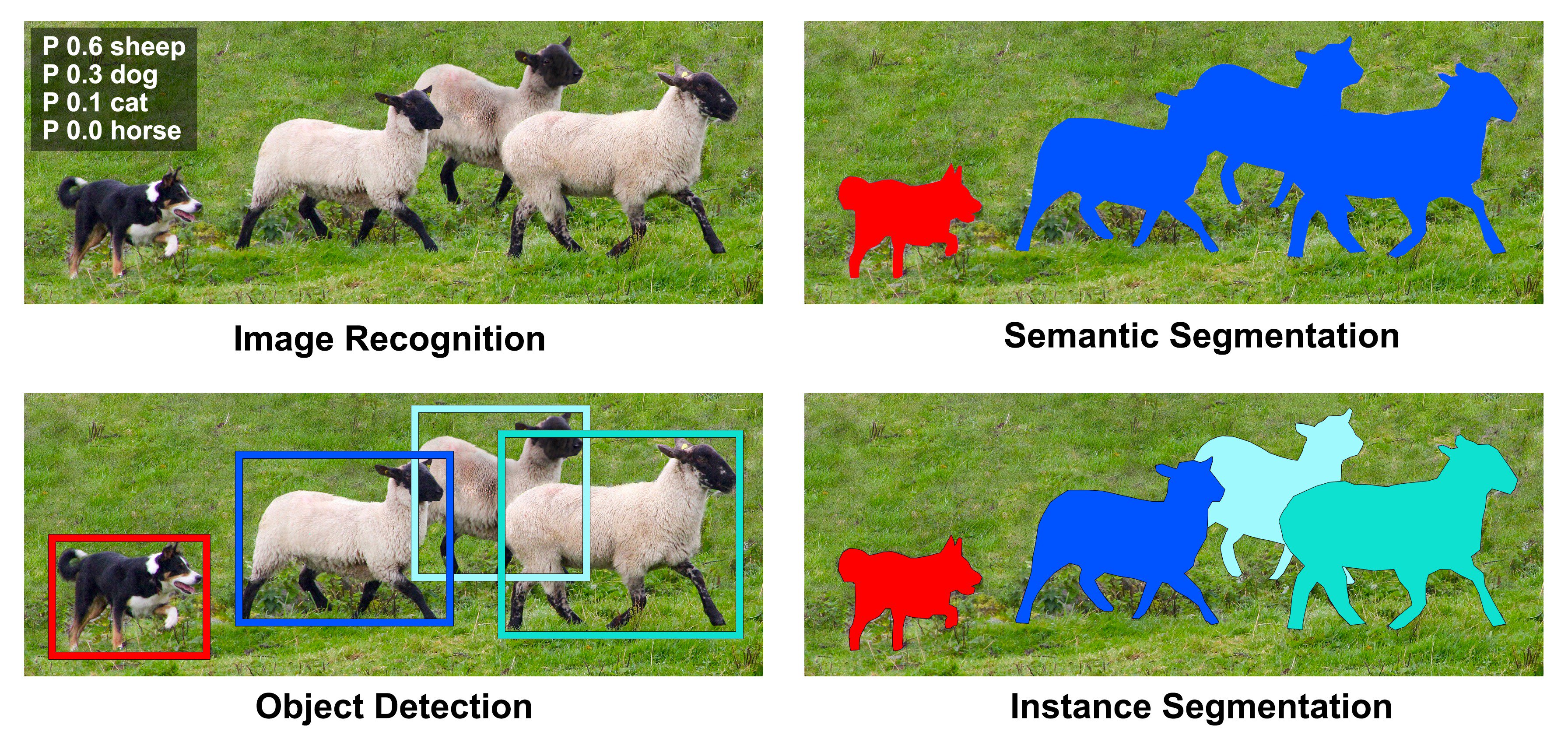
How are annotations stored?#
Usually in plain text!
- Classification: subdirectories, csv files
- Bounding boxes: text files, e.g. COCO, VOC
- Segmentations: Text and/or PNG, e.g. COCO
Not a lot of formal process here - someone builds something for their purposes, others find it useful, variations abound.
Audio annotations#
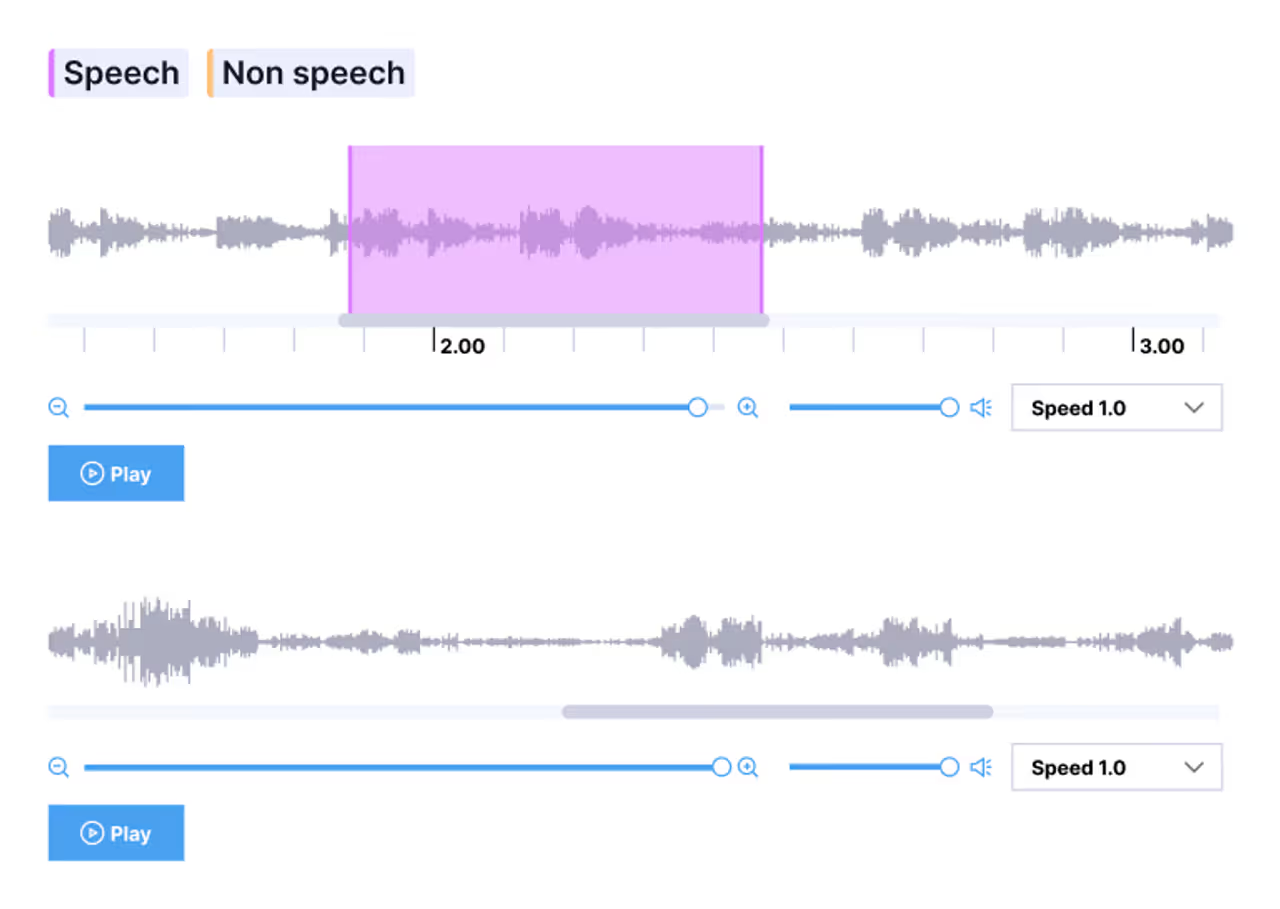
- Classification: file naming/subdirectories, csvs
- Transcription: ASR (json files)
- Timestamps to label segments (csv, json)
Text annotation and beyond#
- Document classification or sentiment analysis
- Named entity recognition, e.g. CoNLL-2003
- Frame-by-frame video labelling
Ultimately there are a ton of data and label formats, you may well need to write a parser to interpret whatever you get
Data Augmentation #
The last topic!#
When making predictions, consider…#
- Your results are only as good as your data
- If it seems too good to be true, it probably is
- Always consider the various sources of data leakage
- If possible, get new samples for testing
- Be skeptical!
Example: a super basic MNIST image classifier
Adding robustness#
- It’s not always possible to get more data, but we can augment what we have
- Images are of the same object even with:
- Geometric transforms – flips, rotations, scaling
- Point operations – brighter/darker/colour shift
- Filtering – Noise, JPEG compression, blurring
- Computer vision libraries like torchvision can turn 1 training image into 50
Make sure that the augmentation makes sense for your context
Augmentation continued#
- Typically only used for training data
- Initially, augmentation may make the performance metrics worse
- Not just for images! Audio signals can have noise added, pitch modulation, tempo changes, compression, resampling, etc
- Tabular data is trickier, but not impossible, particularly with generative AI
Main takeaways#
- Data labels are in a mishmash of formats, and you will likely have to write some kind of parser at some point in your career
- Labelling data is a painful manual process, somewhat assisted by AI tools
- More data = more generalizability, sometimes it helps to invent some
- Above all, be critical of your results! Garbage in = garbage out.
The rest of the course#
- Assignment 3: due Friday (ish, with the usual weekend leniency)
- Monday: Easter, no lab
- Next week: Assignment presentations + review
- Monday, April 13: come to the lab and stuff your H drive before the exam
Home stretch!