Lecture 4: Categorical data
HTML Slides
 │ PDF Slides
 │ Demo code on GitHub

Topic overview#
- Exploring categorical data
- Categorical data encoding strategies
Resources used:
What is categorical data?#
- Samples can take on one of several discrete values or groups
- Nominal: no particular order to the groups
- Ordinal: groups relate to each other in a specific order
- Categories can be represented as strings or numeric types
- Domain knowledge is necessary!
Let’s take a few minutes to brainstorm some examples
Exploring categorical data#
We’ve already done some of this, but some ideas to consider:
pandas.DataFrame.value_counts()- how many of each category?- Use category to group, then compute summary stats
- Plot color per category
- Scatter plot with jitter
Representing categorical data#
Tree-based models can handle string-based categories as-isNot in Scikit-Learn- Consider:
- Ordinal or nominal?
- How many possible categories (cardinality)?
- Any chance new ones might show up?
How could we encode the examples? What are the benefits and drawbacks of each method?
Ordinal encoding#
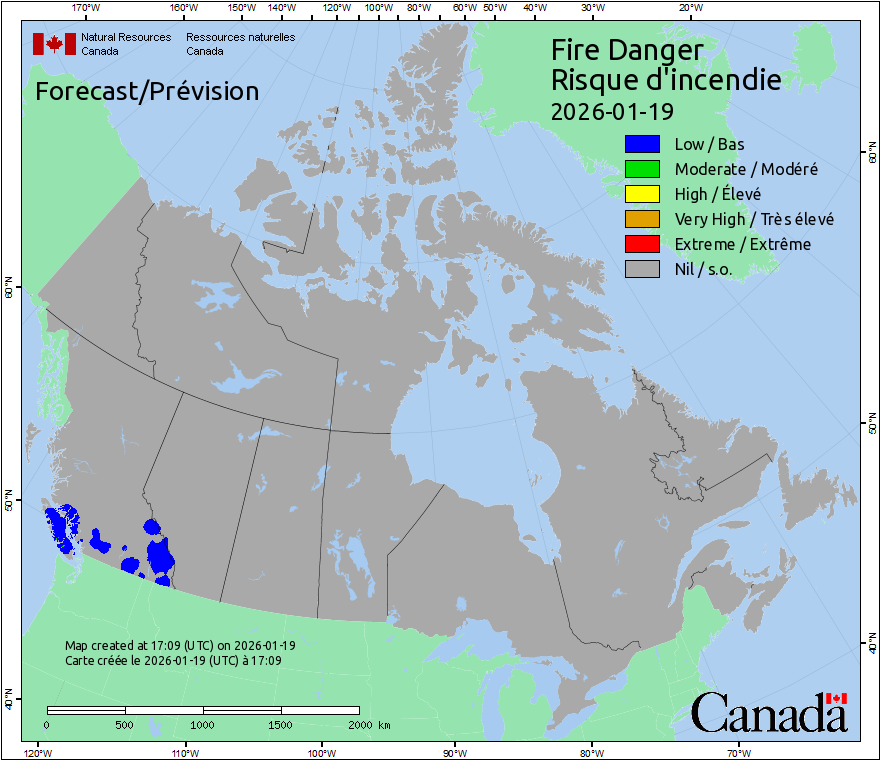
| Category | Feature |
|---|---|
| Nil | 0 |
| Low | 1 |
| Moderate | 2 |
| High | 3 |
| Very High | 4 |
| Extreme | 5 |
Nominal categories: one-hot encoding#
- Categories have no natural relationship
- Create $k$ new features from $k$ categories, very sparse matrix
| Animal | cat | dog | rabbit | |
|---|---|---|---|---|
| cat | → | 1 | 0 | 0 |
| dog | → | 0 | 1 | 0 |
| rabbit | → | 0 | 0 | 1 |
Another approach: target encoding#
- Basic concept: replace the category with the mean of the target
- Essential to avoid data leakage!
- Example: predicting weight of animal
| Animal | mean_kg | |
|---|---|---|
| cat | → | 4.1 |
| dog | → | 15.4 |
| rabbit | → | 2.2 |
Where we left off on January 22#
Getting fancy with feature hashing#
- Good if you have too many categories, or combinations of categories
- Converts each category into a fixed-length feature vector
| Animal | A_0 | A_1 | A_2 | … | A_16 | |
|---|---|---|---|---|---|---|
| cat | → | 1 | 0 | 0 | … | 1 |
| dog | → | 0 | 1 | 0 | … | 1 |
| rabbit | → | 1 | 0 | 1 | … | 0 |
Even fancier methods exist, like supervised encoding methods which basically train a model-within-a-model
From numbers to categories: discretization#
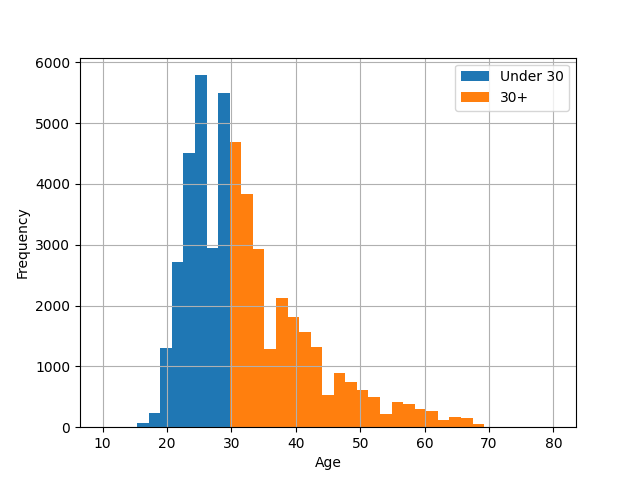
- Sometimes numeric data is better represented as categorical
- Still needs encoding strategy
- Can introduce nonlinear relationships
- Like everything, contextual
Advantages/disadvantages of various methods#
Ordinal#
- Compact (1 column/feature)
- Only useful for naturally ordered data
- Imposes (linear) relationship
- Difficult to deal with novel categories
One-hot#
- No assumptions made about relationships
- Novel features implied by 0
- Memory intensive
- Not good for high cardinality
- Potential collinearity issues
Advantages/disadvantages continued#
Target encoding#
- Powerful if strong predictor
- Compact
- Doesn’t work for unsupervised
- Central tendency poor measure for categories with few samples
- Difficult to deal with novel categories
Feature hashing#
- Natively handles novel categories
- Compact (fixed columns/features)
- Good for high cardinality
- Risk of hash collision
- Loss of interpretability/meaning
Coming up next#
- Assignment 1 January 30th
- Lab: practice with modelling process